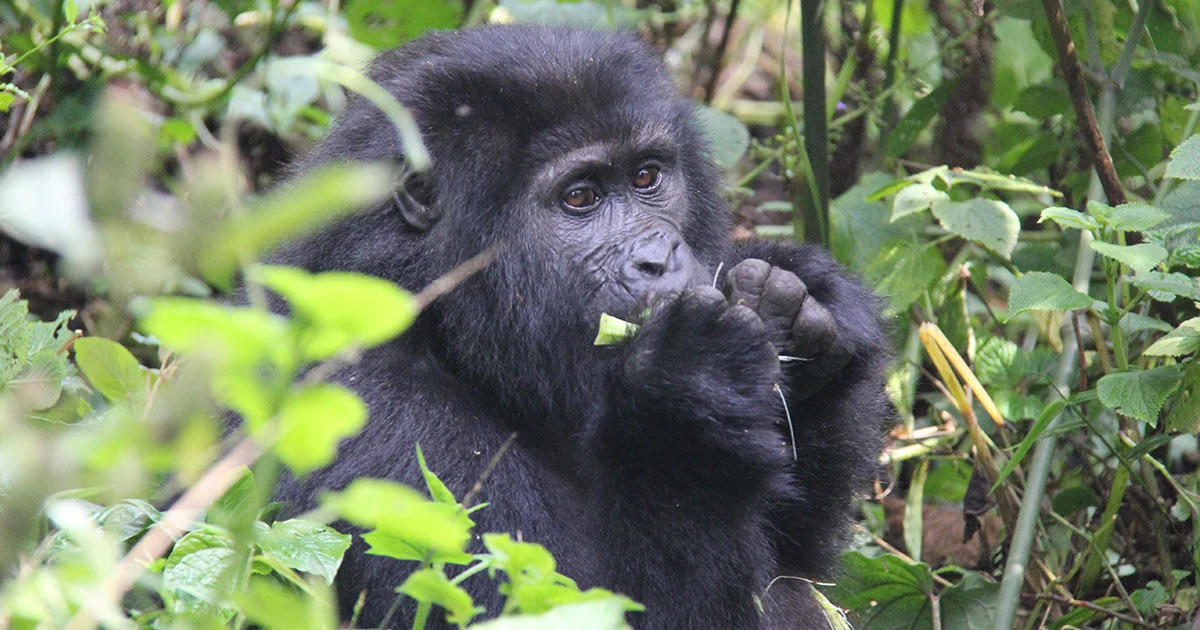
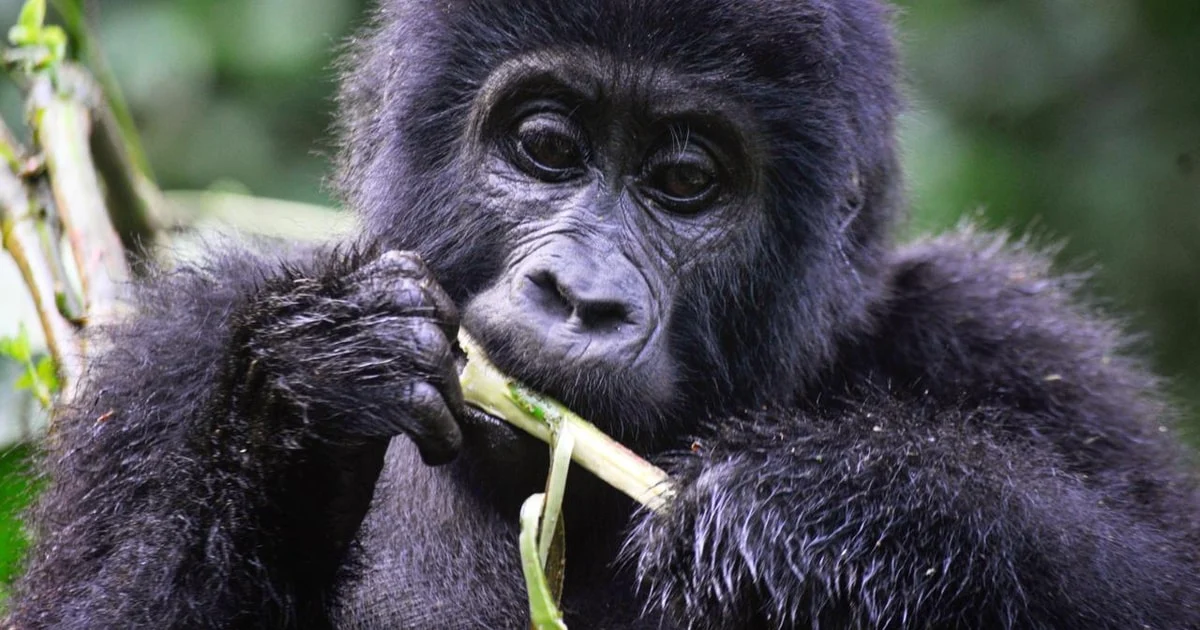
I’ve been organizing gorilla safaris since 2012. There’s something magical about watching these apes, and someonelockingk eyes with a 400-pound silverback for the first time. The forest goes silent. Time stops and, in that moment, everything changes.
I still get goosebumps every single time.
Contact: Email Us or WhatsApp +256-704-613919
What Are Gorilla Safaris?
So, what exactly is a gorilla safari? It’s your chance to trek through misty mountain rainforests and meet endangered mountain gorillas face-to-face in their natural home. This isn’t watching through zoo glass or on a screen; you’ll be standing just meters away from these incredible creatures in the wild forests of Uganda and Rwanda.
Here’s the mind-blowing part: mountain gorillas share 98% of our DNA. When you watch a mother gently cradle her baby or see juvenile gorillas tumbling around like human toddlers, you feel it. That connection is real, and no photograph can capture what it does to your heart.
Once you find them, you get exactly one hour with the gorilla family. But trust me, that hour will stay with you forever.
And here’s something beautiful: your gorilla safari actually helps save these amazing animals. Tourism money goes directly to anti-poaching patrols, gorilla healthcare, and protecting their forest homes. In Uganda, 20% of every permit fee goes straight to local communities living near the parks. When people benefit from protecting gorillas instead of hunting them, everyone wins.
The results speak for themselves. Mountain gorilla numbers have jumped from just 680 in 2008 to over 1,000 today. That’s a conservation success story you’ll be part of when you trek.

Where to Go Gorilla Trekking
You’ve got two amazing options in Uganda for gorilla trekking, and each offers something special.
Bwindi Impenetrable National Park
Bwindi is the big one, Africa’s premier spot for gorilla trekking and a UNESCO World Heritage Site. This ancient rainforest covers 331 square kilometers of seriously thick jungle (hence the “impenetrable” nickname).
Here’s what makes Bwindi incredible: more than 500 mountain gorillas call this place home, which is roughly more than half the world’s entire population! The park has 24 habituated gorilla families spread across four different trekking areas: Buhoma, Ruhija, Rushaga, and Nkuringo.
Each sector has its own vibe. Buhoma is my go-to recommendation for first-timers or anyone worried about the physical challenge. Rushaga and Nkuringo? Those are for the adventurous souls who don’t mind steep climbs but get rewarded with volcanic mountain views that’ll blow your mind.
Oh, and Bwindi isn’t just about gorillas. You’ll likely spot black-and-white colobus monkeys swinging through the trees, colorful forest birds everywhere, and if you’re really lucky, forest elephants (though they’re shy and rarely seen).
Mgahinga Gorilla National Park
Now, Mgahinga is completely different, and I mean that in the best way possible. This smaller park sits right where Uganda, Rwanda, and DR Congo meet. At just 33.7 square kilometers, it’s tiny compared to Bwindi, but what it lacks in size, it makes up for in dramatic scenery.
Picture this: you’re trekking with three massive extinct volcanoes as your backdrop, Mount Muhabura (4,127m), Mount Gahinga (3,474m), and Mount Sabyinyo (3,669m). On clear mornings, these volcanic peaks rise through the mist like something from a fantasy movie. Your Instagram is going to look incredible.
Mgahinga is home to the Nyakagezi gorilla family, and they’re special. This group has multiple silverbacks, which creates fascinating social dynamics you don’t always see. Sometimes they even wander into Rwanda, and back, these gorillas don’t recognize borders!
The trek here often takes you through bamboo forests, which gorillas absolutely love. Watching them munch on tender bamboo shoots is entertainment in itself.
Bonus: Mgahinga is Uganda’s only home for endangered golden monkeys. Many visitors do a gorilla trek one day and golden monkey tracking the next. Two rare primates in one trip? Yes, please.
Volcanoes National Park (Rwanda)
While Valiant Safaris is based in Uganda, we specialize in organizing cross-border itineraries to Rwanda’s Volcanoes National Park. This offers excellent flexibility for travelers flying into Kigali, which is actually closer to both Bwindi and Mgahinga than Uganda’s Entebbe airport.
Rwanda gorilla permits cost $1,500 compared to Uganda’s $800, but some travelers prefer the shorter drive times from Kigali. We can design combined Uganda-Rwanda itineraries that maximize your primate encounters across both countries.

Best Gorilla Safari Packages with Valiant Safaris
We’ve designed our gorilla safari packages to accommodate different schedules, budgets, and adventure preferences. Here are our most popular options:
3-Day Uganda Gorilla Trekking Safari (Fly-in Express)
Perfect for time-conscious travelers who want to maximize their gorilla experience while minimizing travel time. This fly-in express safari includes a domestic flight from Entebbe to Kihihi airstrip, cutting the 8-hour drive to just 90 minutes.
You’ll arrive in Bwindi with energy to spare, trek gorillas the next morning, and fly back to Entebbe that afternoon. Despite the compact timeframe, you’ll have the full gorilla encounter experience plus stunning aerial views of Uganda’s diverse landscapes.
I recommend this package for business travelers, those on tight schedules, or anyone who’d rather spend time with gorillas than on bumpy roads.
4-Day Bwindi Gorilla Tour Adventure (Luxury)
Our luxury gorilla safari showcases Uganda’s finest accommodations alongside your gorilla trek. You’ll stay at premium lodges like Sanctuary Gorilla Forest Lodge, Buhoma Lodge, or Clouds Mountain Gorilla Lodge, properties with incredible views, gourmet cuisine, and exceptional service.
This itinerary includes the gorilla trek, a community visit to learn about Batwa pygmy culture, and plenty of relaxation time. The drive from Entebbe takes you through beautiful countryside, with stops at the Equator monument and scenic viewpoints.
Luxury accommodations mean hot showers after your trek, comfortable beds, and often private balconies where you can watch the forest come alive at dawn. This package attracts honeymooners, anniversary celebrations, and travelers who appreciate comfort alongside adventure.
5-Day Gorilla & Wildlife Safari
This combination safari pairs gorilla trekking in Bwindi with classic wildlife viewing in Queen Elizabeth National Park or Lake Mburo National Park. You’ll experience Uganda’s incredible diversity: mountain gorillas one day, lions and elephants the next.
The wildlife component typically includes game drives, a boat cruise on the Kazinga Channel (famous for hippos and elephants), and opportunities to spot tree-climbing lions in the Ishasha sector. It’s the perfect introduction to Uganda’s dual attractions: rare primates and classic African savanna wildlife.
This package appeals to first-time Africa visitors who want comprehensive wildlife experiences beyond just gorillas.
8-Day or 10-Day Extended Safari Options
Our extended safaris combine gorilla trekking with chimpanzee tracking in Kibale Forest, wildlife safaris in multiple national parks, and cultural experiences. These comprehensive itineraries showcase why Uganda earned its nickname “The Pearl of Africa.”
The 10-day option might include: Murchison Falls National Park for game drives and boat safaris, Kibale Forest for chimp trekking, Queen Elizabeth National Park for wildlife viewing, and Bwindi for gorillas. You’ll see four of Uganda’s ten national parks and encounter an incredible diversity of ecosystems and wildlife.
These packages suit travelers with more time who want the complete Uganda experience. I’ve organized over 150 of these extended safaris, and they consistently receive our highest satisfaction ratings.

How Gorilla Trekking Works
Understanding the gorilla trekking process helps you prepare mentally and physically for this adventure. Here’s exactly what happens on trek day:
Pre-Trek Briefing (7:30 AM): You’ll gather at the park headquarters where rangers explain gorilla behavior, safety protocols, and trekking etiquette. This briefing covers the 7-meter distance rule, what to do if a gorilla approaches you, and photography guidelines.
Group Assignment: Groups are limited to eight people per gorilla family. Rangers consider your fitness level, trekking preferences, and the current location of each gorilla family when making assignments. If you have mobility concerns, inform your guide beforehand, and we can request families closer to the trailhead.
The Trek: Your ranger guide leads the way, often accompanied by a tracker who left earlier to locate the gorilla family. Trek duration varies from 30 minutes to 6 hours, depending on where the gorillas slept the night before and how far they’ve moved while feeding.
The terrain is challenging. You’ll navigate steep slopes, muddy trails, and thick vegetation. Porters are available to carry backpacks and assist with the difficult sections. I always recommend hiring one. It costs around $20 and directly supports local communities.
The Encounter: Once you locate the gorillas, you’ll spend exactly one hour observing them. The silverback (dominant male) usually stays relaxed while feeding or resting. Females groom infants, juveniles play, and the family goes about their day, largely ignoring your presence.
Your ranger will position the group for optimal viewing and photography while maintaining safe distances. Some gorilla families are more curious than others; don’t be surprised if a juvenile approaches you. Stay calm and follow your ranger’s instructions.
Return Trek: After your magical hour, you’ll trek back to the park headquarters, where you receive a gorilla trekking certificate. Most groups celebrate with cold drinks and excited storytelling about their encounter.
Gorilla Permits & Costs (Updated January 2026)
Let’s talk money, because gorilla permits are a big investment, and you deserve to know exactly what you’re paying for.
How much does a Uganda gorilla permit cost?
- Standard Gorilla Trek: $800 per person
- Gorilla Habituation Experience: $1,500 per person
What does your permit include? Your $800 covers your one-hour encounter with the gorillas (or four hours for habituation), an experienced ranger guide, park entrance fees, and a cool certificate to prove you did it. What it doesn’t cover: your accommodation, meals, transportation to/from the park, or porter tips.
Rwanda vs Uganda pricing: Rwanda charges $1,500 for the same gorilla trekking experience. So Uganda saves you $700, that’s significant money you could spend on extending your safari or upgrading your lodge!
Where does your money go? This is the part that makes me proud. Your permit money funds:
- Anti-poaching ranger patrols (keeping gorillas safe 24/7)
- Veterinary care when gorillas get sick or injured
- Forest habitat protection and restoration
- Park management and research
Plus, 20% of every permit goes directly to community projects, schools, health centers, and income programs in villages around the parks. When local people benefit from living near gorillas, they become the gorillas’ best protectors.
When should you book your permit?
Peak seasons (June-August and December-February) sell out fast, I’m talking 4-6 months in advance. If you’re planning to travel during these times, don’t wait. Permits are limited (only 8 people per gorilla family per day), and they go quickly.
Shoulder seasons (March-May and September-November)? You’ve got more flexibility. Book 2-3 months ahead and you’ll usually be fine. Plus, you’ll pay less for accommodation and see fewer tourists.
Here’s a secret: many of my clients actually prefer the “green season” (rainy months). Yes, it rains more, but the forest is gorgeous, the permits are easier to get, and lodge prices drop by 30-40%. If you don’t mind getting a bit muddy, you’ll save serious money.
Important booking notes:
- Permits are non-refundable
- You need to book with your exact passport details
- We handle all the permit paperwork for you (thank goodness, because Uganda Wildlife Authority does not sell directly to foreign consumers, but to licensed tour operators)
- Payment is required upfront to secure your dates
What to Expect on a Gorilla Safari
Terrain & Trek Duration
No two gorilla treks are identical. The mountain gorillas you’re visiting are wild animals that move freely through the forest searching for food. Your trekking experience depends on where they spend the night and how far they’ve traveled since dawn.
Shortest Treks: Occasionally, gorilla families sleep near the park boundary, resulting in 30-minute to 1-hour treks. You’ll walk relatively flat or gently sloping trails through the forest edge before encountering the family.
Average Treks: Most treks last 2-4 hours each way. You’ll climb hills, navigate valleys, push through vegetation, and cross small streams. The terrain is genuinely challenging with steep, muddy slopes, especially after rain.
Longest Treks: Some families range deep into the park interior, requiring 5-6 hours of hiking before you find them. These are physically demanding experiences that test your endurance. However, the remote locations often mean more intimate encounters with less human disturbance.
Physical Requirements: You need reasonable fitness for gorilla trekking. If you can hike for several hours with elevation changes, you’ll manage fine. We’ve had trekkers aged 15 to 85 complete their treks.
Tips for success: Start a walking routine 2-3 months before your safari. Practice on hills or stairs if possible. On trek day, pace yourself, take breaks when needed, and don’t hesitate to use a walking stick (provided by the park) or hire a porter for assistance.
Wildlife & Nature You May Encounter
While mountain gorillas are the headline attraction, Bwindi and Mgahinga forests teem with other remarkable wildlife and natural features.
Other Primates: L’Hoest’s monkeys, black-and-white colobus monkeys, red-tailed monkeys, and blue monkeys are commonly spotted. In Mgahinga, you might see golden monkeys during your gorilla trek.
Birds: Bwindi hosts 23 Albertine Rift endemic bird species found nowhere else on Earth. Watch for African green broadbills, Shelley’s crimsonwing, and several species of sunbirds. Even non-birders are captivated by the forest’s avian diversity.
Forest Elephants: While rarely seen, forest elephants do inhabit Bwindi. You’re more likely to encounter their dung or feeding signs than the elephants themselves.
Insects and Flora: The rainforest shows incredible botanical diversity with giant tree ferns, ancient hardwoods, and thousands of plant species. You’ll see butterflies, fascinating insects, and colorful fungi throughout your trek.
Photography Opportunities: The light filtering through the forest canopy creates magical conditions for photography. Misty mornings produce atmospheric shots of the landscape, while the gorillas themselves offer endless compelling subjects.
I always tell clients: keep your eyes and ears open during the trek itself. The journey through these ancient forests is part of the adventure, not just something to endure before seeing gorillas.
What to Pack for Gorilla Trekking Safari (Your Essential Checklist)
Alright, let’s get practical. After organizing 400+ gorilla treks, I know exactly what works and what doesn’t. Here’s your definitive packing list:
Must-Have Items (Don’t Skip These!)
Footwear & Clothing:
- Waterproof hiking boots with good ankle support and grip (this is #1 priority!)
- Long pants, NOT jeans (jeans get heavy and uncomfortable when wet)
- Long-sleeved shirt (protects you from stinging nettles and bugs)
- Rain jacket or poncho (even “dry season” can surprise you)
- Garden gloves (seriously, they protect your hands when grabbing branches and vegetation)
Gear & Essentials:
- Daypack (or hire a porter to carry it, more on that below)
- 2-3 liters of water (trekking is thirsty work!)
- Energy snacks, nuts, dried fruit, granola bars
- Insect repellent with DEET
- Sunscreen (UV rays penetrate clouds)
Camera Equipment:
- Camera with good low-light performance (the forest is darker than you’d think)
- Extra batteries (humidity drains them fast)
- Protective bag for rain and moisture
- Plenty of memory card space
- No flash photography allowed (it disturbs the gorillas)
Highly Recommended (Trust Me on These)

- Walking stick (parks provide them, but bring your own if you prefer)
- Gaiters (keep mud and leeches out of your boots)
- Quick-dry socks with liner socks underneath
- Small first-aid kit
- Toilet paper and hand sanitizer
- Binoculars for forest bird watching during the trek
Leave These at Home
1. ❌ Perfume or scented lotions (can disturb gorillas with their sensitive noses)
2.❌ Bright, colorful clothing (earth tones help you blend in)
3.❌ Sharp trekking poles (can damage delicate vegetation)
Health & Safety Considerations: You cannot trek if you’re feeling ill, even a common cold can be deadly to gorillas, given our genetic similarity. Parks screen all visitors for symptoms before allowing treks. If you’re sick, your permit can sometimes be rescheduled depending on availability.
I recommend bringing personal medications you need, altitude sickness tablets if you’re prone to it (Mgahinga reaches high elevations), and antihistamines for plant allergies. Many lodges provide basic first aid, but bring your own specialty items.
Best Time to Go on a Gorilla Safari
Uganda’s equatorial location means you can trek gorillas year-round, but timing affects your overall experience. Here’s what to expect in each season:
Dry Seasons (June-August & December-February):
These are peak seasons for excellent reasons. Trails are less muddy and slippery, making trekking safer and more comfortable. Vegetation is slightly sparser, improving visibility for gorilla viewing and photography.
However, “dry” in a rainforest isrelativev; you should still expect some rain. Pack rain gear regardless of travel dates.
Advantages: Better trekking conditions, clearer skies, excellent photography light, and easier forest navigation.
Disadvantages: Higher accommodation prices, permits book out 4-6 months in advance, more trekkers in the forest (though you still won’t encounter crowds, maximum 8 per group).
Wet Seasons (March-May & September-November):
Uganda’s rainy seasons bring frequent afternoon showers and generally wetter conditions. Trails become muddy and slippery, requiring more careful navigation.
But here’s what many travelers don’t realize: these “green seasons” offer distinct advantages. The forest explodes with lush vegetation, waterfalls flow more dramatically, and wildlife viewing can actually improve as animals congregate around reliable water sources.
Advantages: Lower accommodation rates (sometimes 30-40% cheaper), easier permit availability, fewer tourists, beautiful misty forest atmosphere, excellent for photographers seeking dramatic conditions.
Disadvantages: Muddy, slippery trails requiring better physical conditioning, more rain during treks, potentially longer hikes as gorillas range farther for food.
My Personal Recommendation:
For first-time trekkers prioritizing comfort, book dry season dates. For experienced hikers who don’t mind rain and want better value, the wet seasons are fantastic. I’ve organized memorable treks every month; the gorillas are incredible regardless of season.
Many of my European clients actually prefer March-May and September-November. They get discounted rates, avoid crowds, and enjoy the rainforest at its most vibrant.
Special Considerations:
If you’re combining your gorilla safari with wildlife viewing in savanna parks, the dry seasons offer better game drives. Animals congregate around water sources, making sightings easier.
For photographers, consider the “short rains” in November-December when you get a mix of dry weather and dramatic skies, often the best conditions for compelling images.
Gorilla Safari FAQs (Your Questions Answered!)
What is a gorilla safari?
A gorilla safari is a guided trek through mountain rainforests to see endangered mountain gorillas in their natural habitat. You’ll hike with experienced rangers, find a habituated gorilla family, and spend one incredible hour observing them up close.
How long does a gorilla trek take?
It varies! Trek duration depends on where the gorillas slept and how far they’ve moved. You might find them in 30 minutes, or it could take 6 hours of hiking. On average, expect 2-4 hours each way. Once you find them, you get exactly one hour to observe them.
How much does gorilla trekking cost?
Uganda charges $800 per person for a standard gorilla permit. Rwanda costs $1,500 for the same experience. Your permit includes the one-hour encounter, ranger guide, park fees, and a certificate. It doesn’t cover accommodation, meals, or transportation.
When is the best time to go gorilla trekking?
Dry seasons (June-August and December-February) offer easier trekking with less mud. But wet seasons (March-May and September-November) have advantages: lower prices, fewer tourists, lush scenery, and easier permit availability. Honestly? Gorillas are amazing year-round!
What is the minimum age for gorilla trekking?
You must be at least 15 years old. This rule exists because the trek can be physically demanding, and younger kids might struggle with staying quiet and following instructions during the encounter. Rangers check passports, so no exceptions.
How close do you get to the gorillas?
Rangers maintain a 7-meter (about 23 feet) distance for safety and to protect the gorillas from human diseases. But here’s the thing, gorillas sometimes approach closer out of curiosity! If that happens, stay calm and still. Your ranger will manage the situation. It’s thrilling!
Is gorilla trekking safe?
Absolutely! Mountain gorillas are gentle, habituated to humans, and rarely aggressive. Armed rangers accompany every trek to protect against the very rare chance of encountering forest elephants or buffalo. Just follow your ranger’s instructions, and you’ll be completely safe.
Can I trek if I’m not super fit?
You need reasonable fitness, think “able to hike for a few hours with hills.” You don’t need to be an athlete, but gorilla trekking is genuinely challenging. Start a walking routine 2-3 months before your trip if you’re not regularly active. And remember, porters can help carry your bag and assist on difficult sections!
What happens if I can’t complete the trek?
If you’re really struggling, porters and rangers can help you. In extreme cases, a ranger can escort you back while the group continues. But honestly, with proper preparation and a porter’s help, most people manage fine. We’ve had trekkers aged 15 to 78 succeed!
Can I trek with a cold or when sick?
Absolutely not. If you’re ill, even with minor cold symptoms, you cannot trek. Mountain gorillas share 98% of our DNA, so our diseases easily transmit to them. A simple cold can kill a gorilla. If you’re sick on trek day, contact us immediately about rescheduling options.
Do I need travel insurance?
Yes! Get comprehensive insurance covering medical emergencies, evacuation, and trip cancellation. Gorilla permits cost $800 and are non-refundable, so insurance protects your investment if something unexpected happens.
Should I hire a porter?
I strongly recommend it! Porters cost around $20 for the day. They’ll carry your backpack, help you over difficult terrain, and you’re directly supporting local communities. Even if you’re fit, having a porter makes the trek more enjoyable so you can focus on the experience instead of watching your footing constantly.
What’s the difference between trekking and habituation?
Standard trekking gives you one hour with a habituated gorilla family ($800). Gorilla habituation experiences let you spend four hours with a family still being habituated to humans ($1,500). Habituation is only available in Bwindi’s Rushaga sector and gives you a more immersive, behind-the-scenes look at the habituation process.
Why Choose Valiant Safaris for Your Gorilla Safari
Over my 14 years organizing Uganda safaris, I’ve learned that successful gorilla treks require more than just booking a permit. Here’s what sets Valiant Safaris apart:
Tailor-Made Itineraries:
We don’t sell packaged tours pulled from a catalog. Every safari we organize is customized to your interests, budget, physical fitness level, and schedule. Want to combine gorillas with chimpanzee trekking? Prefer luxury lodges or budget camping? Need to accommodate mobility challenges? We design exactly the right experience for you.
Expert Local Knowledge:
Our team has been raised and lives in areas protecting the Mountain gorillas. We’ve personally visited every lodge we recommend, trekked with every ranger team, and explored every trail. This local expertise means we can answer your questions accurately, recommend the best sectors for your fitness level, and handle unexpected situations quickly.
Seamless Logistics:
Gorilla trekking involves complex coordination, permits, accommodations, transportation, meals, and park fees. We manage every detail so you can focus on enjoying your adventure. Our safari vehicles are modern 4×4 Land Cruisers maintained to high safety standards, and our drivers are trained, licensed professionals who know these mountain roads intimately.
Conservation Commitment:
We’re not just tour operators; we’re conservation partners. We work with Uganda Wildlife Authority, support community projects around gorilla parks, and practice responsible tourism that benefits both wildlife and local people. When you book with us, you’re supporting ethical, sustainable tourism.
Experienced Guides:
All our safari guides are Uganda Tourism Board licensed professionals with extensive experience in gorilla trekking logistics. They handle pre-trek coordination, ensure you have proper gear, brief you thoroughly, and serve as your advocate if any issues arise.
Transparent Pricing:
Our quotes include all major costs upfront, no hidden fees or surprise charges. You’ll know exactly what you’re paying for: permits, accommodations, meals specified in your itinerary, park fees, transportation, and guide services.
Flexibility & Support:
Travel plans sometimes change. We maintain flexible booking policies (within permit constraints) and provide 24/7 support during your safari. If you encounter any problems, you can reach our team immediately via WhatsApp, phone, or email.
Customer Testimonials:
Successful gorilla treks have earned us excellent ratings on TripAdvisor, Trustpilot, and many other platforms. Our clients consistently highlight our attention to detail, knowledgeable guides, and seamless organization.
Many of my clients return for different experiences after their gorilla trek; they come back for chimpanzee safaris, wildlife adventures in Kidepo Valley, or birding expeditions. That return business tells me we’re doing something right.

Book Your Gorilla Safari in Uganda Today
You’ve read about the experience. You’ve seen the photographs. Now it’s time to make it real.
Booking a gorilla safari might feel overwhelming: permits, logistics, packing, and preparation. That’s exactly why Valiant Safaris exists. We transform the complex process into a simple, stress-free journey from your first inquiry to your final farewell at Entebbe Airport.
Here’s how to get started:
Contact us via email or WhatsApp at +256-704-613919. Tell us about your travel dates, group size, budget, and interests. Do you want just gorillas, or a combination safari? Luxury accommodation or comfortable mid-range lodges?
We’ll design a custom itinerary based on your preferences, check permit availability for your dates, and provide a detailed quote with everything included.
Once you confirm, we’ll secure your gorilla permits (which require payment upfront), book your accommodation, and handle all logistics. You’ll receive a comprehensive pre-safari information pack covering what to pack, what to expect, and how to prepare.
Throughout your safari, our team supports you every step of the way. Your driver-guide will be your constant companion, handling navigation, wildlife spotting, and ensuring your comfort. Our Kampala office remains available 24/7 for any questions or needs.
The mountain gorillas of Bwindi and Mgahinga won’t live around you forever; the memories of the trek will. The opportunity to look into a silverback’s eyes and recognize your shared ancestry is a privilege that should not be postponed indefinitely.
Every day, I receive messages from clients describing their gorilla trek as “life-changing,” “the most incredible experience ever,” or “worth every penny and then some.” After organizing over 400 of these adventures, I still get emotional reading their stories.
Your adventure is waiting. Let’s make it happen.
About the Author
Joseph Wejuli was born in Uganda and grew up visiting the country’s remarkable national parks with his family. After studying tourism management at Makerere University, he joined Valiant Safaris in 2017 following a decade of experience with top safari operators in the industry.
Joseph has organized over 400 gorilla treks and specializes in working with North American and European travelers. He loves showing visitors the Uganda that most tourists never see, hidden viewpoints, local community projects, and the authentic experiences that make safaris truly memorable.
When he’s not planning safaris, Joseph volunteers with conservation education programs in communities around Bwindi Impenetrable National Park, helping local children understand the value of protecting their natural heritage.
Ready to book your gorilla safari? Contact Joseph directly:
- Email Us
- WhatsApp: +256-704-613919
- Website: www.valiantsafaris.com

Senior Safari Planner, Valiant Safaris
Joseph grew up in Uganda, with the country’s national parks woven into his childhood. That early connection to the wild set the course for a career now spanning nearly two decades in East African tourism.
After completing his degree in Tourism Management at Makerere University, Joseph spent a decade with several of Uganda’s leading tour operators, building an intimate knowledge of the region’s parks, wildlife, and cultures long before he joined Valiant Safaris in 2017. In the years since, he has personally planned more than 400 gorilla treks experience spanning every budget tier, with particular expertise in curating polished, thoughtful journeys for luxury and top mid-range travelers from North America, Europe and the rest of the world.
As Senior Safari Planner, Joseph specializes in gorilla trekking, wildlife safaris, authentic cultural encounters, and farm & community tours, alongside adventure and sustainable travel experiences across Uganda, Rwanda, Tanzania, Kenya, Burundi, and the Democratic Republic of Congo. His approach favors depth over checklist tourism, taking travelers beyond the well-worn trail to the East Africa most visitors never get to see.
For guests planning a safari with Joseph, the result is more than a well-organized trip. It’s a journey shaped by someone who has spent a lifetime learning this land.