

Prepare your fitness and stamina for hiking through Uganda’s forests during a gorilla trekking adventure.
You do not need to be an athlete. You do need to be able to walk for several hours on steep, uneven, muddy ground. That is the honest answer to how fit you need to be for gorilla trekking in Uganda.
Most healthy travellers with a good walking habit complete the trek. Some finish it in two or three hours. Others walk for six or seven. The difference depends on where the gorilla family slept the night before, not on your age or your passport.
This guide explains the gorilla trekking fitness requirements in plain terms. You will learn how hard the trek really is, how long you walk, and how to train. You will also see how porters, walking sticks, and a sedan chair can help. As a Ugandan operator, Valiant Safaris wants you to arrive confident, not worried.

How Fit Do You Need to Be for Gorilla Trekking in Uganda?
Think “regular walker”, not “marathon runner”. If you can hike for three to five hours on hilly ground and still enjoy yourself, you are in good shape for most treks. If a flat two-hour walk leaves you exhausted, spend a few months building stamina first.
What Is the Recommended Fitness Level?
The gorilla trekking fitness requirements are modest. A good fitness level for gorilla trekking means moderate cardiovascular endurance and steady legs. You should climb stairs without stopping and walk uphill at a comfortable pace. You also need decent balance. Slippery slopes are normal here.
A simple test many operators use: can you walk three to five hours in hilly terrain? Can you climb 20 to 30 flights of stairs in a row? If yes, you are ready to start a short training plan.
Do You Need to Be an Experienced Hiker?
No. Many of our guests have never done a multi-day hike. What matters is time on your feet, not trail experience. The rangers set the pace, and they stop often.
Still, practise in the boots you will wear. Blisters end more treks than weak lungs do.
Can Beginners Go Gorilla Trekking?
Yes, as long as they are in generally good health and over 15. The Uganda Wildlife Authority sets that minimum age. So how fit do you need to be for gorilla trekking as a beginner? Fit enough to walk a few hours uphill, and willing to prepare. Beginners simply need more preparation time. Eight weeks of regular walking makes a big difference.
How Difficult Is Gorilla Trekking?
People often ask how difficult is gorilla trekking compared with a normal hike. The short answer: it is demanding because of the terrain, not because of speed. You walk slowly. You also walk through a rainforest with no marked path.
Honest travel companies never promise an “easy” trek. The gorilla trekking difficulty can change from one morning to the next. A trek that takes two hours today may take six tomorrow.
Steep Hills and Uneven Forest Trails
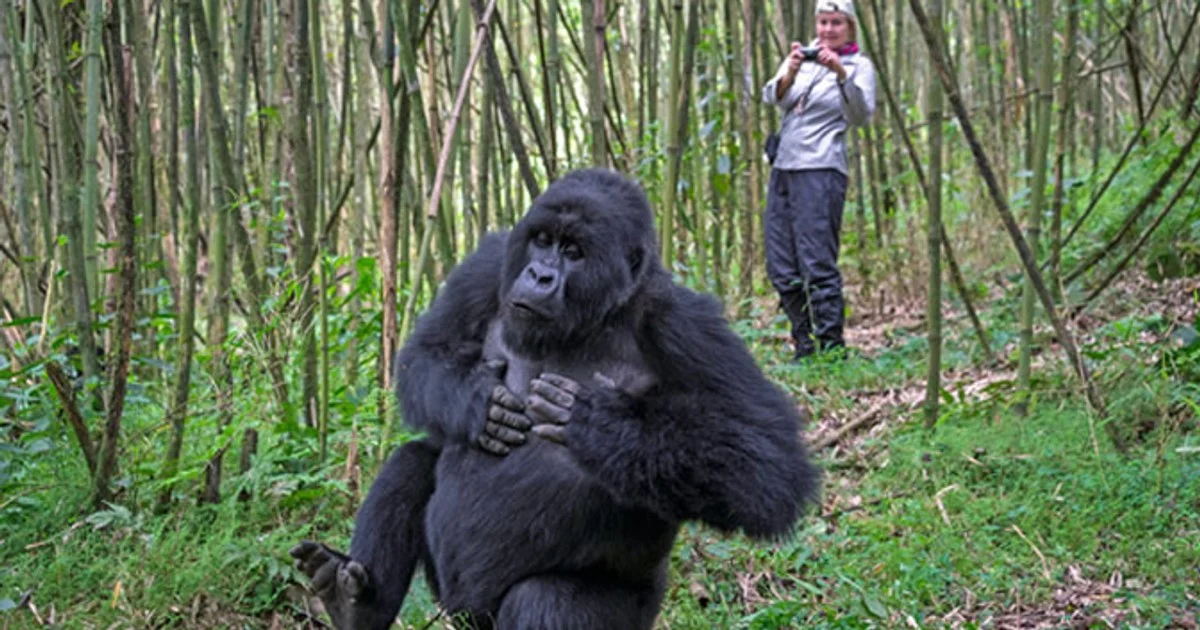
Bwindi Impenetrable National Park is a mountain rainforest. The ground rises and falls constantly. Some sections are steep enough that you will use your hands.
Trackers lead the way and cut through vegetation with machetes. Expect narrow paths, sudden drops and plenty of climbing.
Mud, Tree Roots and Dense Vegetation
It can rain in the forest at any time of year. Mud makes slopes slick. Roots and vines hide under leaves. Good boots and a walking stick matter more than fast legs.
Dense vegetation also slows you down. You step carefully, often one foot at a time.
Altitude and Physical Endurance
Bwindi sits at roughly 1,160 to 2,607 metres above sea level. Most treks happen between about 1,800 and 2,500 metres. That is high enough to make you breathe harder on climbs.
Most guests do not get altitude sickness here. Still, drink water often and move at a steady pace. Tell your guide if you feel dizzy.
Uphill Climbs and Downhill Walking
Uphill tests your lungs. Downhill tests your knees. Many first-timers find the steep descent harder than the climb. Strong thighs and a walking stick protect your joints on the way down.
How Long Do You Walk During Gorilla Trekking?
So, how long does gorilla trekking take? Uganda Wildlife Authority guidance puts tracking at around two to seven hours. Some days run shorter. A few run longer. The viewing time is separate.
What Determines the Trek Duration?
Gorillas do not stay in one place. They move through the forest each day to feed. Trackers leave early to find where the family spent the night. They then guide you there.
Your gorilla trek duration in Uganda depends on three things: where the family is, how steep the path is and how the weather has been. Your own pace matters less than you think.
How Far Might You Walk in Bwindi?
Distances vary too much to give one number. Some guests walk a few kilometres. Others walk much further across several ridges. Hours walking during gorilla trekking is a better measure than distance, because slopes and mud slow everyone down.
How Long Do You Spend with the Gorillas?
Once you reach the family, you get one hour. Rangers keep a distance of about seven metres. A group never exceeds eight trekkers per gorilla family per day.
The hour passes fast. Most guests say it is the best hour of their trip. That is why the walk, however long, feels worth it.
What Physical Abilities Do You Need for Gorilla Trekking?

Gorilla trekking physical fitness is about four abilities. You do not need to be elite in any of them. You just need a base level.
Cardiovascular Endurance
Good cardiovascular endurance lets you keep walking when the path climbs. Walking, cycling and swimming all help. Aim for a steady effort, not a sprint.
Leg Strength and Knee Stability
Steps in the forest are high and irregular. Strong quads, glutes and calves keep you stable. Knee stability matters most on descents. If you have had knee problems, talk to your doctor before you book.
Balance on Slippery Terrain
You will step over roots and across wet slopes. Balance exercises, such as standing on one leg, help. So do walking sticks.
Stamina for Long Walks
Stamina is simply the ability to keep going for hours. Long, slow walks build it best. Add a small backpack as you train.
My Personal Experience: What I See on Trek Day
I am Joseph Wejuli, and I have guided hundreds of gorilla treks. Guests ask me how fit you need to be for gorilla trekking at almost every briefing. Here is what I have learned about fitness on the ground.
The people who struggle are rarely the ones you expect. A fit city runner may hit the first muddy slope and lose confidence. A guest in their late sixties, who walks every morning at home, may glide through at a steady pace.
Attitude matters as much as training. Guests who go slowly and enjoy the forest do better than guests who race. Rangers wait. Nobody is in a hurry.
I also see the same mistakes again and again. Guests arrive in brand-new boots. They skip the walking stick. They leave water in the vehicle. Each one is easy to avoid.
If I could give you one rule, it would be this: train in your own boots, and tell your guide the truth about your fitness. We then plan the day around you, not against you.
How to Prepare for Gorilla Trekking Physically
Wondering how to prepare for gorilla trekking? Your answer to how fit you need to be for gorilla trekking sets your training time. Start about eight weeks before you travel. If you are less active, start twelve. Small, regular efforts beat a last-minute rush.
Walking and Hiking Practice
Walk three to four times a week. Build up to a long walk of three hours or more on weekends. Hills are better than flat paths. If you have no hills, use a treadmill on a steep incline.
Hill Walking and Stair Climbing
Stairs are the best gym in your home. Climb them with a light daypack. Take them slowly, then add speed. Try to build to 20 or 30 flights without a break.
Leg-Strength Exercises
Two short sessions a week are enough. Good choices include squats, lunges, step-ups and calf raises. Add planks for your core. Keep the movements slow and controlled.
Improving Balance and Stability
Stand on one leg while you brush your teeth. Walk heel to toe along a line. Try step-downs from a low bench. These small habits help you stay upright on wet roots.
Practising in Your Trekking Boots
Wear your boots on every long walk. Break them in well. Also wear the socks you plan to use in Uganda. That is the best way to avoid blisters.
An 8-Week Gorilla Trekking Fitness Plan
Use this gorilla trekking fitness plan as a general guide, not as medical advice. With it, the gorilla trekking fitness requirements are easy to meet. Adjust it to your fitness and check with your doctor before you start. If you are already active, you can progress faster.
| Weeks | Focus | Weekly Routine |
| 1–2 | Build a walking routine | 3 walks of 30–45 minutes, plus 1 strength session |
| 3–4 | Add time and inclines | 3 walks of 45–60 minutes with hills, plus 2 strength sessions |
| 5–6 | Practise longer hikes | 2 walks of 45–60 minutes, plus 1 long hike of 2–3 hours with a light pack |
| 7–8 | Build endurance and prepare | 1 long hike of 3+ hours in your boots, 2 shorter walks, then ease off in the last week |
A few tips make the plan work:
- Add a 5 to 8 kg pack on your long weekend walk.
- Do hill intervals once a week: two minutes up hard, two minutes easy.
- Rest at least one full day each week.
- Stop and see a doctor if you feel chest pain or sharp joint pain.
- Taper in the final week so you arrive fresh.
This gorilla trekking training does not need a gym. Most of it is just walking.
Does Gorilla Trekking Difficulty Vary by Location?
Yes. The park, the sector and the gorilla family all change your day. No sector is “always easy”. Still, some patterns help you plan.
Gorilla Trekking in Bwindi Impenetrable National Park
Bwindi has four main trekking sectors. Each starts from a different part of the park. Each has several gorilla families. The family you are assigned matters more than the sector name.
Buhoma, Ruhija, Rushaga and Nkuringo Sectors
Here is a general comparison. Use it as a guide, not a promise.
| Sector | General Character | Notes |
| Buhoma | Often shorter, gentler starts | Popular with first-timers; conditions still vary |
| Rushaga | In between | Many gorilla families; difficulty depends on the group |
| Ruhija | Higher and tougher in places | More climbing; cooler air |
| Nkuringo | Known for steep climbs and descents | Beautiful views; strong legs help |
Read our guide to planning a gorilla tour in Bwindi for more on the sectors. You can also learn about the park on our Bwindi Impenetrable National Park page.
Gorilla Trekking in Mgahinga Gorilla National Park
Mgahinga Gorilla National Park lies on the Virunga volcano slopes near Kisoro. It is smaller than Bwindi. Terrain can be steep, muddy and cold. Treks vary in length, just as they do in Bwindi.
Can You Request a Less Demanding Trek?
Often, yes. When you book, tell us about your fitness and mobility. Park rangers decide the final family assignment, but they take your needs into account. Early notice gives us the best chance of a suitable group. We cannot promise a short trek. We can ask.
Can You Go Gorilla Trekking If You Are Not Very Fit?
Can an unfit person go gorilla trekking? Yes, with realistic expectations and support. You do not need to be fast. You need to be steady, and you need to ask for help early.
Trekking with Limited Hiking Experience
Choose good boots, hire a porter and bring a walking stick. Train for at least eight weeks. Tell your guide about your concerns on the morning of the trek.
Walking at a Steady Pace and Taking Breaks
Rangers stop often. Use those stops to breathe, drink and eat a snack. Do not try to keep up with the fastest person. Slow, steady walkers finish the same trek.
When to Discuss Mobility Needs Before Booking
Do it early. Tell us about knee, hip, back, heart or breathing concerns before you pay. We can then suggest the right sector, season and support options. Contact us any time with questions.
How Porters Help During Gorilla Trekking
A gorilla trekking porter is a local community member who carries your daypack and helps you on tough sections. Whatever your answer to how fit you need to be for gorilla trekking, many guests hire one. It is one of the best-value choices on trek day.
Carrying Your Daypack
A porter carries your water, rain jacket and camera bag. A lighter back means more energy for the climb. It also keeps your hands free for balance.
Support on Steep and Slippery Trails
On steep slopes, a porter can offer a hand or a steady arm. They know the paths. They also know where the mud is worst. That quiet help makes a big difference.
Hiring a Porter and Supporting Local Communities
Porter fees go straight to local families. You help create jobs around the park. Fees are usually small. Tipping is customary. Carry small bills in local currency.
Here is what trek-day support usually looks like. Prices change, so please confirm the current rate when you book.
| Item | Typical Cost | Notes |
| Gorilla trekking permit (one hour) | $800 per person | Required for every trekker; check our permit information |
| Porter | About $15–$20 per trek, plus tip | Optional; carries your daypack |
| Walking stick | Often provided, or bring your own | Ask your guide |
| Sedan chair (carry chair) | Roughly $300–$500 per trek | Must be arranged in advance |
For the total trip budget, see our gorilla trekking cost in Uganda guide.
What Should You Wear and Carry on a Gorilla Trek?
Good gear makes the walk easier. Our guide on what to wear for gorilla trekking has the full list. Our Uganda safari packing list covers the rest of your trip. Here is the short version.
Hiking Boots and Grippy Footwear
Wear waterproof hiking boots with deep tread. Break them in well before you travel. Pull your socks up over your trouser legs. This keeps safari ants out.
Long Trousers, Gloves and Rain Protection
Wear long trousers and a long-sleeve shirt. Thorns and nettles are common. Gardening gloves help you grab branches. Pack a light rain jacket, even in the dry season. Gaiters keep mud out of your boots.
Water, Snacks and a Lightweight Daypack
Carry at least two litres of water. Bring energy bars. Use a small waterproof daypack. A porter can carry it for you.
Walking Stick and Other Helpful Equipment
A walking stick eases strain on your knees, especially on descents. You may also want a hat, sunglasses and insect repellent. Bring a camera with no flash.
What If You Cannot Complete the Gorilla Trek?
It happens, and it is nothing to be ashamed of. The key is to speak up early.
Tell Your Guide About Your Difficulty
Say it as soon as you feel tired. Rangers can slow the pace and allow longer breaks. They can also help you with a porter. Waiting until you are exhausted limits your options.
Understand the Available Assistance Options
Some trekkers use a sedan chair, a carry chair that porters bear on poles. It is a real option for guests with limited mobility. It usually needs advance booking. Ask us at the time of your enquiry so we can plan it.
Age, Health and Gorilla Trekking Fitness
Is Gorilla Trekking Suitable for Older Adults?
Often yes. The park sets a minimum age of 15, not a maximum. The gorilla trekking fitness requirements do not change with age alone. Gorilla trekking for older adults is common, and many older guests do very well. Fitness, not birth year, decides.
Should You Trek with a Pre-Existing Medical Condition?
It depends on the condition. Heart, lung, joint and balance issues need extra thought. Your doctor should clear you first. Also arrange travel insurance that covers trekking and emergency evacuation.
What to Discuss with Your Doctor Before the Trek
Tell your doctor about the trek. Explain that it involves three to seven hours of hiking at altitude on steep ground. Ask about vaccinations, medication and any limits. This guide is general information, not medical advice.
Frequently Asked Questions
How fit do you need to be for gorilla trekking?
You need moderate fitness. If you can hike three to five hours on hilly ground, you are generally ready. Athletic ability is not required. Porters and a walking stick help.
Can an unfit person go gorilla trekking?
Yes, with preparation and support. Train for at least eight weeks, hire a porter and tell your guide early. A sedan chair can be arranged in advance for those who need it.
How many hours do you walk during gorilla trekking?
Uganda Wildlife Authority guidance suggests around two to seven hours. Some treks are shorter and a few are longer. You then spend one hour with the gorillas.
Do you need to exercise before gorilla trekking?
Yes. Eight weeks of walking, stair climbing and leg exercises is a good target. You do not need a gym.
Is gorilla trekking harder than hiking?
It is different. The pace is slow, but the terrain is steep, wet and pathless. Many guests find it harder than a normal trail hike for that reason. Compare with our guide on whether gorilla trekking in Rwanda is challenging.
Can older adults go gorilla trekking in Uganda?
Yes. There is a minimum age of 15, but no maximum. Good health and sensible fitness matter most. Speak to your doctor first.
Can a porter help if you struggle to walk?
Yes. A porter can carry your bag and steady you on steep sections. For guests with limited mobility, a sedan chair may also be arranged in advance. Ask us when you enquire.
Prepare for Your Uganda Gorilla Trekking Safari
Now you know how fit you need to be for gorilla trekking. You also know how to train, what to bring and how support works. The forest is demanding, but it is also generous.
We tailor every trip around you. That includes the pace, the sector and your support on the day. For example, you could consider our 4-day Bwindi gorilla tour (luxury) or our 3-day Uganda gorilla trekking safari. The fly-in express option also reduces road time before your trek.
Or WhatsApp us on +256-704-613919. We will help you plan with confidence.

Senior Safari Planner, Valiant Safaris
Joseph grew up in Uganda, with the country’s national parks woven into his childhood. That early connection to the wild set the course for a career now spanning nearly two decades in East African tourism.
After completing his degree in Tourism Management at Makerere University, Joseph spent a decade with several of Uganda’s leading tour operators, building an intimate knowledge of the region’s parks, wildlife, and cultures long before he joined Valiant Safaris in 2017. In the years since, he has personally planned more than 400 gorilla treks experience spanning every budget tier, with particular expertise in curating polished, thoughtful journeys for luxury and top mid-range travelers from North America, Europe and the rest of the world.
As Senior Safari Planner, Joseph specializes in gorilla trekking, wildlife safaris, authentic cultural encounters, and farm & community tours, alongside adventure and sustainable travel experiences across Uganda, Rwanda, Tanzania, Kenya, Burundi, and the Democratic Republic of Congo. His approach favors depth over checklist tourism, taking travelers beyond the well-worn trail to the East Africa most visitors never get to see.
For guests planning a safari with Joseph, the result is more than a well-organized trip. It’s a journey shaped by someone who has spent a lifetime learning this land.


