

Planning a solo traveler Uganda safari in 2026? Uganda offers an unforgettable combination of mountain gorilla trekking, chimpanzee tracking, wildlife game drives, boat safaris, and cultural experiences, making it an ideal destination for travelers exploring East Africa on their own. From Bwindi Impenetrable National Park and Kibale Forest National Park to Queen Elizabeth National Park and Murchison Falls National Park, a solo trip can be tailored around your travel dates, budget, preferred accommodation, and safari interests.
A solo safari in Uganda can be arranged for one traveler as a private, tailor-made journey or through selected group departures. Depending on your itinerary, you can track mountain gorillas in Bwindi, search for chimpanzees in Kibale, see lions, elephants, leopards, and buffalo on game drives, and cruise the Kazinga Channel among hippos and waterbirds. This guide explains Uganda safari costs for one person, single supplements, the best destinations and activities, solo gorilla trekking, safety, accommodation, transport, and practical booking tips to help you plan the right Uganda safari itinerary for your trip.
By the end, you’ll have a clear, realistic picture of what a solo traveler Uganda safari looks like, from planning through to the moment you’re standing in front of a wild gorilla family.

Can You Go on a Uganda Safari as a Solo Traveler?
Yes, without question. A solo traveler Uganda safari is entirely achievable, and Valiant Safaris designs itineraries specifically with independent travelers in mind. You’re never expected to already have a group lined up before you can book.
Here’s how it actually works in practice. Your trip can be arranged as a private safari, built entirely around your own schedule, pace, and interests, with a dedicated 4×4 vehicle and driver-guide just for you. Alternatively, where a fixed departure or group safari exists for your chosen dates, you can join other travelers and share both the cost and the experience.
It’s also worth noting upfront that you can’t do
independently. Rangers lead every trek, and each permitted group includes other trekkers assigned to the same gorilla family that day. So even a fully solo, fully private itinerary still involves this shared, guided structure once you reach Bwindi or Mgahinga.
Most solo itineraries combine several experiences into one trip. A typical route might pair gorilla trekking, chimpanzee tracking, a game drive through open savanna, and a boat cruise along a river or channel. Current tour operators specifically market this kind of combination to solo travelers, since it delivers Uganda’s signature wildlife experiences without requiring a large travel group to make the logistics work.
Why Choose Uganda for a Solo Safari?
Gorilla Trekking in Bwindi
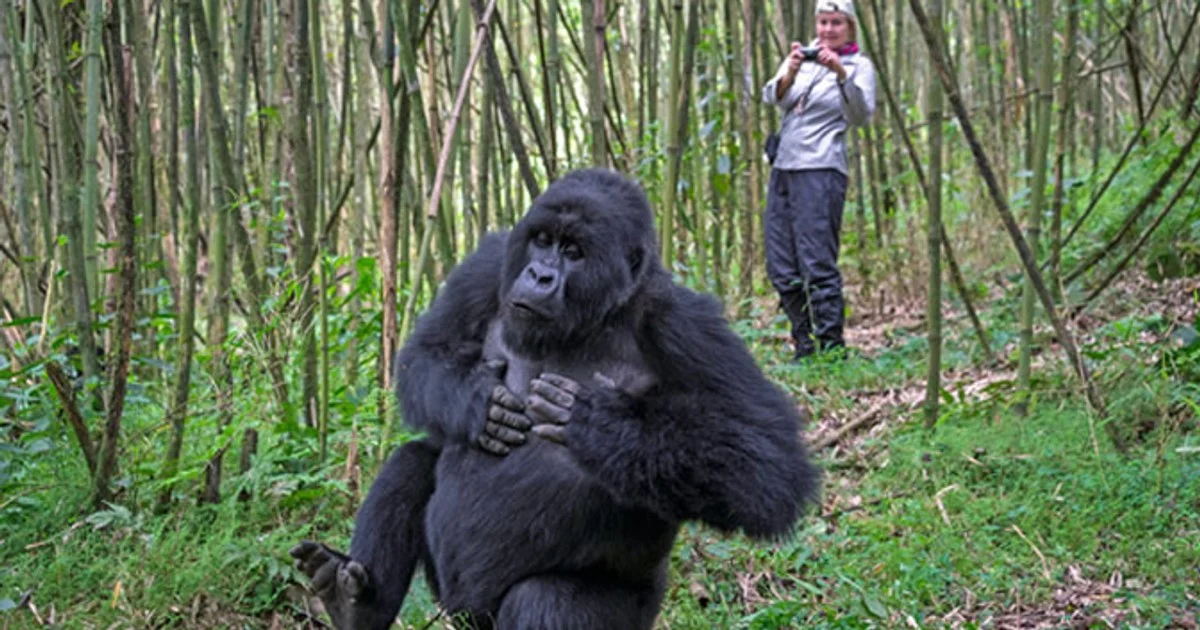
Tracking a mountain gorilla family through Bwindi Impenetrable National Park is Uganda’s single most sought-after solo experience. You’ll walk through dense, ancient rainforest alongside an armed ranger and a small group of fellow trekkers, following trackers who monitor gorilla movement each morning. The moment you finally observe a gorilla family at the permitted viewing distance, the solitude of solo travel disappears entirely, replaced by one of the most memorable wildlife encounters on Earth. This experience alone convinces many independent travelers to choose Uganda over other safari destinations.
Chimpanzee Tracking in Kibale
Kibale Forest National Park gives solo travelers an active, fast-paced alternative to gorilla trekking. Chimpanzees move constantly, call loudly, and interact within large, noisy communities, so the forest feels alive in a way that suits travelers wanting a more energetic encounter. Because chimp permits are generally more available than gorilla permits, Kibale is often easier to slot into a shorter or more flexible solo itinerary.
Wildlife Safaris
Uganda’s savanna parks, including Queen Elizabeth National Park, Murchison Falls National Park, and Kidepo Valley National Park, offer classic game drives without requiring a group to fill a vehicle. As a solo traveler on a private safari, you get the entire vehicle to yourself, meaning better sightlines, more flexible stops, and a driver-guide who can adjust the pace entirely around your interests, whether that’s photography, birding, or simply patient wildlife-watching.
Boat Safaris
Boat cruises along the Kazinga Channel and the Nile River near Murchison Falls give solo travelers a relaxed, low-effort way to see hippos, crocodiles, elephants, and water birds up close. Unlike a walking safari, a boat cruise requires no physical exertion, which makes it an easy addition to any itinerary regardless of fitness level or trekking experience.
Cultural Experiences
Community visits near Bwindi, Kibale, and other park areas add valuable context to a wildlife-heavy itinerary. Solo travelers often find these encounters, whether a Batwa cultural walk or a local craft cooperative visit, to be some of the most memorable parts of their trip, since one-on-one conversations with guides and community members happen more naturally without a large group around.
Flexible Private Itineraries
Perhaps the biggest advantage of a private safari for a solo traveler is control. You decide how long to linger at a viewpoint, whether to add an extra activity, or when to simply rest. Nothing about your day depends on group consensus, which many independent travelers find far more relaxing than a fixed group tour schedule.
How Much Does a Solo Uganda Safari Cost?
Pricing for a solo traveler Uganda safari depends on three main factors: itinerary length, accommodation category, and which activities and parks are included. A short 3-day gorilla-focused trip costs far less than a 10-day route combining primates, savanna wildlife, and multiple park transfers. Because permits, private transport, and single-occupancy accommodation all factor differently into each itinerary, there’s no single “correct” number that applies to every solo traveler.
In 2026, a Uganda safari typically costs $150–$1,200+ per person per day, depending on style, accommodation, and whether primate permits are included.
| Safari style | Daily cost (USD) | Best for |
| Basic | $150–$250 | Backpackers, short trips, no gorilla permit |
| Mid-range | $250–$550 | Most solo travelers; comfort + value |
| Luxury | $600–$1,200+ | Premium lodges, private guiding, fly-in options |
These ranges exclude international flights and are based on 2026 market rates from multiple operators.
Low-cost Solo Uganda Safari
Low-cost itineraries rely on simpler guesthouses or budget lodges, and sometimes on shared transport options where they’re available. This keeps daily costs lower, though gorilla and chimpanzee permit fees remain fixed regardless of accommodation choice, since those are set by the Uganda Wildlife Authority.
A realistic Low-cost trip with guesthouse accommodation can run from around $150–$250 per day, excluding international flights.
Mid-Range Solo Uganda Safari
A mid-range Uganda solo safari typically includes a private vehicle and driver-guide paired with comfortable, well-reviewed lodges. This tier balances cost and comfort well, and it’s the most commonly booked category among first-time solo visitors who still want reliable comfort without luxury pricing.
For a 7-day Uganda safari including gorilla trekking, expect to pay roughly $2,800–$4,200 total for a mid-range private solo itinerary.
Luxury Solo Uganda Safari
Luxury solo itineraries include premium lodges, often with spacious rooms, private decks, and higher staff-to-guest ratios. Because luxury lodges rarely discount single occupancy proportionally, this tier tends to show the starkest gap between solo and per-person group pricing.
Luxury private safaris can run $600–$1,200+ per day, with 7-day itineraries reaching $5,000–$9,000+ when including gorilla permits and high-end accommodation.
Solo Safari Cost Per Day
Daily costs vary sharply depending on which activities are scheduled. A day built around a gorilla permit and a luxury lodge stay costs dramatically more than a straightforward game-drive day at a mid-range property, so total trip cost depends heavily on how many “permit days” your itinerary includes.
Solo Gorilla Safari Cost
A solo gorilla safari includes the same gorilla permit fee that every trekker pays, regardless of group size, plus your private transport, guide fees, park entry, and accommodation. Because the permit portion doesn’t change based on how many people you’re traveling with, a solo gorilla itinerary often feels proportionally more expensive than a wildlife-only trip.
Current operators show very different solo prices depending on itinerary and accommodation level. One 2026 operator lists a 7-day deluxe Uganda safari at more than US$10,000 for a solo traveler, while other operators publish much lower prices for shorter or simpler itineraries. This wide range is exactly why transparent, package-specific pricing serves solo travelers far better than one generic industry “average.”
Why Is a Uganda Safari More Expensive for Solo Travelers?
Single Room Supplement
Lodges build their standard room rate around double occupancy. When one traveler books that same room alone, most properties add a single supplement to offset the lost second-guest revenue. This is usually the single biggest reason solo per-person costs run higher than group per-person costs.
Single supplements typically range from 10–30% of the room rate, sometimes more at luxury camps. Some lodges offer dedicated single rooms with no supplement, so it’s worth asking your operator to prioritize these.
Private Safari Vehicle
A safari vehicle, driver-guide, and fuel costs stay roughly fixed whether one person or four people are traveling. In a group, that cost splits four ways. For a solo traveler, the entire cost falls on one person, which significantly raises the per-day transport cost on a private itinerary.
Driver-Guide Cost
Your driver-guide’s daily fee doesn’t scale down for a single traveler. Whether you’re one person or a full group, you still need one professional, licensed guide handling navigation, park logistics, and wildlife knowledge throughout the trip.
Accommodation Cost
Some lodges, particularly smaller boutique properties, price by room rather than strictly by person. This structure affects solo travelers more directly, since a “per room” rate applied to one guest naturally raises the effective per-person cost.
Gorilla and Chimpanzee Permits
Gorilla permit and chimpanzee permit fees are charged per person, set centrally by the Uganda Wildlife Authority. This is one cost that never changes with group size, so it’s not actually a “solo penalty,” even though it can feel that way when comparing per-person totals.
Park Fees
Standard park entry fees also apply per person rather than per vehicle or per group, which further reinforces why total trip cost scales with each traveler rather than dropping meaningfully for solo bookings.
Understanding which of these costs are genuinely per-person versus effectively shared group costs helps explain, clearly and honestly, why solo pricing often looks higher on paper than the same trip split among friends.
Uganda Safari Single Supplement for Solo Travelers
What Is a Single Supplement?
A single supplement is an additional fee that lodges and tour operators charge when one traveler occupies a room, tent, or vehicle seat that was priced assuming two people. It’s a standard practice across the global travel industry, not something unique to Uganda, but it directly affects how much a solo safari costs compared to the advertised “per person sharing” rate you’ll often see quoted online.
Why Do Safari Lodges Charge Single Supplements?
Lodges calculate their base rates around double occupancy because that’s how most of their rooms are designed and priced for maximum revenue. When a room goes to a single guest instead of two, the property loses that second guest’s contribution to meals, park fees, and overhead costs bundled into the rate, so the supplement recovers some of that difference.
Does Every Uganda Safari Have a Single Supplement?
Not universally, no. Some lodges and camps maintain dedicated single rooms priced at standard rates specifically to accommodate solo travelers. Others apply a supplement across every room category, regardless of size or configuration. This inconsistency is exactly why it’s worth confirming the policy for each specific property before assuming a flat percentage applies everywhere.
How Can Solo Travelers Reduce Single Supplements?
A few practical strategies help here:
- Choosing lodges with dedicated single rooms avoids the fee entirely
- Traveling during low season sometimes brings reduced or waived supplements as an incentive
- Joining a fixed departure, where the cost structure is built differently, can also sidestep the issue altogether
Can Solo Travelers Join a Group Safari?
Yes, wherever a fixed departure or scheduled group tour exists for your travel dates. This is one of the most effective ways to reduce overall cost, since vehicle, guide, and sometimes even permit-day costs get distributed across a full group rather than absorbed by one traveler.
Current operator pricing demonstrates that “single person room” and “solo traveler” pricing are not always treated as the same category. Some competitors blur this distinction in their marketing, which is exactly why confirming precisely what’s included in any quoted solo price matters before you commit.
Private vs Group Uganda Safari for Solo Travelers
| Feature | Private Safari | Group/Fixed Departure |
| Privacy | Private | Shared |
| Itinerary | Flexible | Fixed |
| Vehicle | Private | Shared |
| Cost per person | Usually higher | Can be lower |
| Schedule | Flexible | Group schedule |
| Social experience | More private | Meet other travelers |
| Custom activities | More flexible | Limited |
Private Uganda Safari for One Person
A private safari gives you complete control over your schedule. You decide how long to spend at each stop, whether to add an extra activity, and how early or late to start each day. This flexibility comes at a premium cost, since you’re covering the full vehicle, guide, and often accommodation expense on your own.
Joining a Group Safari
A group safari or fixed departure joins you with other travelers on a pre-set itinerary, sharing transport and guide costs across the group. This usually reduces per-person pricing meaningfully, and it adds a natural social element, since you’ll likely spend meals and long drives chatting with fellow travelers.
Which Option Fits Your Travel Style?
Neither option is objectively better; it depends entirely on what you value. Travelers who prioritize flexibility, privacy, and a fully custom pace tend to choose private safaris. Travelers who are more budget-conscious, or who enjoy meeting people on the road, often prefer group departures. Some solo travelers even mix both, booking a group trek for gorilla trekking day and a private vehicle for the rest of their route.
Is Uganda Safe for Solo Travelers?
Is Uganda Safe for First-Time Solo Travelers?
Uganda welcomes thousands of international solo visitors each year, and the main tourist circuit is well accustomed to independent guests. Booking through a licensed, experienced operator makes a meaningful difference, since your driver-guide effectively handles the logistics, navigation, and local knowledge that a first-time visitor might otherwise find daunting alone.
Safety During Safari Transfers
Long-distance road transfers between parks can involve several hours of driving on a mix of paved and unpaved roads. A professional driver-guide familiar with these routes removes most of the uncertainty a solo traveler might otherwise face navigating independently, and reputable operators use well-maintained 4×4 vehicles suited to Uganda’s road conditions.
Safety at Safari Lodges
Established safari lodges typically maintain security staff, controlled gate access, and staff who are used to solo guests. Most solo travelers report feeling comfortable and looked after at reputable properties, particularly those regularly used by international tour operators.
Safety During Gorilla Trekking
Gorilla trekking happens within a structured, ranger-led group, often accompanied by armed escorts in certain sectors as a standard precaution against wildlife encounters unrelated to the gorillas themselves. You are never trekking through the forest independently, which removes much of the safety concern solo travelers might otherwise associate with remote forest activities.
Safety During Game Drives
Game drives take place entirely from within your safari vehicle, following established park roads under your guide’s direction. There’s no independent walking near dangerous wildlife involved, which makes this one of the lower-risk activities on a typical solo itinerary.
Traveling Around Cities
Kampala and Entebbe carry the same basic urban precautions as any major city: keeping valuables out of sight, using trusted transport rather than unmarked taxis, and staying alert in crowded areas. Most solo travelers pass through these cities briefly, at the start and end of their safari, minimizing extended independent city exposure.
Solo Female Traveler Considerations
Solo female travelers generally find Uganda’s safari circuit manageable with standard precautions, particularly when accommodation and transport are arranged in advance through a licensed operator. Confirming pickup details, staying at well-reviewed properties, and sharing your itinerary with someone at home are simple, effective steps.
We won’t claim Uganda is “100% safe,” because no destination anywhere can honestly make that promise. What we can say is that sensible precautions, paired with a reputable, licensed operator, address the vast majority of realistic concerns a solo traveler is likely to encounter.

Solo Gorilla Trekking in Uganda
Can You Go Gorilla Trekking Alone?
You can absolutely book your overall safari as a solo traveler, but the trek itself is never a solitary walk through the forest. Every gorilla permit places you within a small group of fellow trekkers, all assigned to the same gorilla family and led by trained rangers. This structure exists for safety and conservation reasons, and it applies equally whether you arrived as a couple, a family, or completely alone.
What Happens When You Arrive at Bwindi?
Your day begins with a briefing at the park headquarters, where rangers explain trekking rules, viewing etiquette, and safety guidelines. You’re then assigned to a specific gorilla family based on fitness level and trekker preference where possible, and you set off with your assigned group, rangers, and trackers who already know roughly where that family was last seen.
Gorilla Trekking Group Size
The Uganda Wildlife Authority caps the number of trekkers permitted per gorilla family each day, a rule designed to limit stress on the gorillas and preserve the quality of the encounter. This means your solo booking still places you within a small, manageable group rather than a large crowd.
Gorilla Permit Cost for Solo Travelers
The gorilla permit fee is fixed per person by the Uganda Wildlife Authority, so a solo traveler pays exactly the same permit price as anyone trekking within a couple or a family group. This is one area where solo travel genuinely doesn’t cost extra.
For 2026 travel, the standard Uganda gorilla trekking permit for foreign non-residents is USD 800 per person under the current Uganda Wildlife Authority tariff. Low-season discounts apply in April, May, and November, reducing the fee to $600 for foreign non-residents.
Bwindi Gorilla Trekking Sectors
- Buhoma – the original, most established trekking sector, with well-developed lodge infrastructure
- Ruhija – known for higher-altitude trekking and cooler forest conditions
- Rushaga – home to the largest number of habituated gorilla families, including options for the extended habituation experience
- Nkuringo – often considered more physically demanding, with dramatic, steep terrain
Each sector offers access to different gorilla families, distinct terrain, and slightly different lodge options, so your choice can shape both difficulty level and overall trip logistics.
Mgahinga Gorilla Trekking
Mgahinga Gorilla National Park, in Uganda’s southwest, offers an alternative to Bwindi with generally fewer visitors and a more remote feel. It’s a smaller park with a single habituated gorilla family available for trekking at any given time, which can appeal to solo travelers seeking a quieter, less crowded experience.
Gorilla Trekking Difficulty
Trekking difficulty ranges from moderate to genuinely strenuous, depending entirely on where the gorilla family happens to be located that particular day. Some treks take under two hours; others involve steep, muddy climbs lasting most of the morning. Reasonable fitness helps, though rangers do accommodate a range of ability levels.
How Long Does Gorilla Trekking Take?
Total trek duration varies with gorilla movement patterns, so it’s genuinely unpredictable from one day to the next. Most experiences combine a few hours of forest hiking with a strictly regulated one-hour viewing period once the gorilla family is located, followed by the return hike out.
A useful distinction worth holding onto throughout your planning: your overall safari can be entirely solo and privately arranged, while the gorilla trek itself remains a shared, regulated, ranger-led activity by design.
Best Uganda Safari Destinations for Solo Travelers
Bwindi Impenetrable National Park
Best for: Gorilla trekking. Bwindi remains Uganda’s flagship destination for solo travelers specifically chasing a mountain gorilla encounter, with well-developed infrastructure across all four trekking sectors.
Kibale Forest National Park
Best for: Chimpanzee trekking. Kibale suits solo travelers wanting an active, fast-moving primate encounter, along with strong birdlife and the nearby Bigodi Wetland Sanctuary as an easy add-on.
Queen Elizabeth National Park
Best for: Wildlife and the Kazinga Channel. This park combines savanna game drives with a relaxed boat cruise, giving solo travelers a well-rounded wildlife day without excessive physical demands.
Murchison Falls National Park
Best for: Game drives and a Nile boat safari. Uganda’s largest national park offers dramatic waterfall scenery alongside strong game viewing, making it a favorite multi-day stop on longer solo itineraries.
Lake Mburo National Park
Best for: Shorter wildlife experiences. Its proximity to the Kampala-Bwindi road makes Lake Mburo a convenient stop for solo travelers wanting a quick wildlife fix without a major detour.
Kidepo Valley National Park
Best for: Remote wilderness. Kidepo rewards solo travelers with more time and a genuine interest in Uganda’s less-visited regions, offering a raw, uncrowded safari experience far from the main tourist circuit.
No single destination deserves the label “best overall.” The right choice depends entirely on which specific experience- primates, savanna wildlife, or remote wilderness- matters most to you.
Best Uganda Safari Activities for Solo Travelers
- Gorilla trekking – Uganda’s headline wildlife experience, tracking habituated mountain gorilla families through Bwindi or Mgahinga
- Chimpanzee tracking – following wild chimp communities through Kibale’s dense forest canopy
- Game drives – open-vehicle wildlife viewing across Uganda’s savanna parks
- Boat cruise on the Kazinga Channel – relaxed wildlife viewing between Lake Edward and Lake George
- Murchison Falls boat safari – a Nile River cruise toward the base of the falls themselves
- Rhino tracking – on-foot tracking of southern white rhinos at Ziwa Rhino Sanctuary, en route to Murchison Falls
- Birdwatching – Uganda’s exceptional bird diversity spans wetlands, forests, and savanna alike
- Nature walks – guided forest or community walks, offering a gentler pace between major activities
- Cultural experiences – community visits that add local context and conversation to a wildlife-focused trip
- Golden monkey trekking – a Mgahinga-area activity, less well known but rewarding for primate enthusiasts
This range gives solo travelers genuine flexibility to build a varied, personally meaningful itinerary rather than a one-size-fits-all package.
Best Solo Uganda Safari Itineraries
3 Day Uganda Gorilla Safari for Solo Travelers
Entebbe → Bwindi → Gorilla Trek → Entebbe/Kigali
This compact route suits travelers with limited time who want the gorilla trekking experience without a lengthy multi-park circuit.
5 Day Uganda Safari for Solo Travelers
Entebbe → Murchison Falls/Kibale → Wildlife → Return
Five days allows for one major destination plus enough buffer time for the long road transfers Uganda’s parks typically require.
7 Day Uganda Solo Safari
A fuller route combining chimpanzee tracking, savanna game drives, and gorilla trekking within a single trip. Seven days is often the sweet spot for solo travelers wanting real depth without an extended, multi-week commitment.
8 Day Uganda Solo Safari
Kibale → Queen Elizabeth → Bwindi → Lake Mburo
This route strings together Uganda’s primate and savanna highlights into one continuous, well-paced circuit.
10 Day Uganda Solo Safari
Extends the 8-day route with additional wildlife stops or a second cultural experience, giving more breathing room between activity days and longer transfers.
14 Day Uganda Solo Safari
A comprehensive route covering primates, savanna wildlife, and more remote parks like Kidepo Valley. This length suits travelers treating Uganda as a dedicated, in-depth trip rather than a shorter add-on to a wider East Africa itinerary.
8 Day Uganda Safari for a Solo Traveler
This itinerary mirrors Valiant’s 8 Days Uganda Primate Adventure, a particularly strong fit for solo travelers wanting both primates and classic wildlife in one well-structured trip.
| Day | Route |
| Day 1 | Arrival in Entebbe |
| Day 2 | Entebbe to Kibale |
| Day 3 | Chimpanzee trekking |
| Day 4 | Transfer to Queen Elizabeth National Park |
| Day 5 | Queen Elizabeth to Bwindi |
| Day 6 | Gorilla trekking |
| Day 7 | Bwindi to Lake Mburo |
| Day 8 | Return to Entebbe |
Your 8-day Uganda safari begins with a comfortable airport pickup on Day 1, followed by an overnight stay near Entebbe, giving you time to relax after your flight. On Day 2, travel west toward Kibale Forest, with scenic stops and beautiful countryside views along the way.
Day 3 is dedicated to chimpanzee trekking in Kibale’s Kanyanchu area. After the trek, you can opt for a guided Bigodi Wetland walk to discover more of Uganda’s wildlife and birdlife. The journey continues on Day 4 toward Queen Elizabeth National Park, with an opportunity for an en-route game drive depending on your schedule.
On Day 5, continue south toward Bwindi Impenetrable Forest. The route through the Ishasha sector offers a chance to spot its famous tree-climbing lions and other wildlife. Day 6 is reserved for the unforgettable gorilla trekking experience in Bwindi, offering an intimate encounter with one of Uganda’s most remarkable wildlife species.
After the gorilla trek, Day 7 takes you toward Lake Mburo National Park for a more relaxed wildlife experience and a shorter safari activity. Finally, Day 8 brings your Uganda adventure to an end as you travel back to Entebbe for your departure flight.
Solo pricing for this route depends on your chosen accommodation level and the current single supplement terms at each lodge along the way. Contact Valiant Safaris for an accurate solo-versus-group price comparison before booking.
How to Reduce the Cost of a Solo Uganda Safari
- Join a fixed-departure group to share vehicle, guide, and sometimes accommodation costs across several travelers instead of covering them alone.
- Choose mid-range accommodation instead of luxury lodges, since the price gap between tiers is often larger than the comfort gap.
- Travel during low season, when lodge rates and sometimes single supplements are more favorable than during peak months.
- Compare single supplements across different properties before booking, since the fee varies significantly from lodge to lodge.
- Choose a shorter itinerary if budget is the primary constraint, focusing your permit days on the one or two experiences that matter most to you.
- Combine activities in one route to reduce the number of separate long-distance transfers, which cuts both time and fuel costs.
- Compare package inclusions carefully, since quotes that look cheaper sometimes exclude meals, park fees, or transfers that a more complete quote already bundles in.
- Book through a licensed safari operator with transparent pricing, avoiding unclear add-on fees that can appear later in the process.
Not every low-season month carries the same discount, and pricing shifts year to year, so always confirm current rates against the actual tariff for your specific travel dates rather than relying on general seasonal assumptions.
Cheapest Time for a Solo Uganda Safari

Low Season
Low season months typically bring reduced lodge rates across most accommodation categories, which particularly benefits solo travelers already absorbing a single supplement. Fewer visitors also mean quieter parks and lodges, a bonus for travelers who prefer a more peaceful atmosphere.
Dry Season
Dry season months remain popular precisely because trekking conditions are easier and roads are less muddy. That popularity, however, tends to push demand, and sometimes pricing, higher than during quieter months.
Shoulder Season
Shoulder season months often strike a practical balance between manageable weather and more reasonable pricing, making them worth serious consideration for budget-conscious solo travelers who don’t want to compromise heavily on trekking conditions.
Gorilla Permit Pricing
Gorilla permit pricing remains fixed by the Uganda Wildlife Authority regardless of season, except for low-season discounts in April, May, and November. Seasonal savings come almost entirely from accommodation and transport rather than the permit fee itself.
Accommodation Pricing
Accommodation rates fluctuate far more than permit fees throughout the year, which makes lodge selection and travel timing the biggest lever a solo traveler has for controlling overall trip cost.
See our related guide on the Cheapest Time to Trek Gorillas in Uganda for a deeper seasonal breakdown across the full year.
Solo Traveler Uganda Safari Packing List
- Safari clothing in neutral tones such as khaki, olive, or brown, which blend better into natural surroundings during game drives
- Gorilla trekking clothing, including long trousers to protect against forest vegetation and nettles
- Waterproof jacket, essential given Uganda’s rainforest parks and unpredictable showers
- Hiking boots with good ankle support and grip, particularly important for muddy Bwindi trails
- Sturdy daypack to carry water, snacks, and camera gear during treks
- Insect repellent, applied regularly, especially in forest and wetland areas
- Camera and binoculars, ideally with a spare battery and memory card for longer trekking days
- Reusable water bottle to stay hydrated throughout long walking days
- Travel documents and permit confirmations, kept both physically and digitally accessible
Packing light but purposefully makes solo travel logistics genuinely easier, since you’re managing your own bags at every transfer without help from travel companions.
What to Expect on a Solo Uganda Safari
Airport Pickup
Your driver-guide typically meets you directly at Entebbe International Airport, holding a sign with your name, and handles onward transport from the very first moment of your trip.
Meeting Your Driver-Guide
This person becomes your primary point of contact for the entire journey, handling route planning, park entry logistics, wildlife spotting, and local context along the way. For a solo traveler, this relationship often becomes one of the most valuable parts of the trip.
Long-Distance Road Travel
Uganda’s national parks sit several hours apart by road, so expect meaningful driving time between destinations, sometimes five or six hours in a single day. Scenic stops along the way, at viewpoints, local markets, or the equator crossing, help break up longer drives.
Safari Lodges
Lodges range from simple budget guesthouses to elaborate luxury camps, and each offers a noticeably different solo travel experience. Many properties are used to hosting solo guests and structure common areas, like lounges and dining rooms, in ways that make dining alone feel entirely normal.
Meals
Most lodges include meals as part of your package, often served in shared dining spaces where solo travelers naturally strike up conversations with other guests over dinner. This communal dining setup is one of the easiest, lowest-effort ways to socialize on an otherwise private itinerary.
Game Drives
Game drives happen entirely from your safari vehicle, with your guide navigating park roads and pointing out wildlife along the way. As a solo traveler on a private safari, you get full flexibility over how long to pause at any given sighting.
Gorilla Trekking
You’ll join a small group of fellow permit holders for the actual trek, even if every other part of your itinerary has been entirely private. This is one of the few moments on a solo trip where you’re guaranteed to spend meaningful time alongside other travelers.
Meeting Other Travelers
Beyond gorilla trekking day, shared dining areas, lodge common spaces, and group activities create natural, low-pressure opportunities to meet other travelers throughout your trip, even on a fully independent itinerary.
Solo Female Travel in Uganda
Accommodation
Choosing well-reviewed lodges with secure, controlled access adds meaningful peace of mind for solo female travelers. Reading recent reviews specifically mentioning solo female guests can offer useful, firsthand reassurance beyond general property ratings.
Transport
Private transport with a vetted, licensed driver-guide is the most common and comfortable choice among solo female visitors, removing the uncertainty of navigating unfamiliar public transport options independently.
Gorilla Trekking
The guided, group-based structure of gorilla trekking applies equally to solo female travelers, meaning you’re never trekking alone through remote forest terrain regardless of gender.
Dress and Local Customs
Modest, practical clothing serves double duty here, respecting local cultural norms while also proving genuinely useful for forest trekking conditions involving vegetation, insects, and variable weather.
Staying Connected
A local SIM card, easily purchased on arrival, helps solo female travelers stay in touch with family and their tour operator throughout the trip, adding an extra layer of reassurance during long travel days.
Practical Safety Tips
Sharing your full itinerary with someone at home, confirming pickup and drop-off details in advance, and keeping your operator’s emergency contact readily accessible are simple, low-effort steps that meaningfully add to overall trip security.
Current specialist content increasingly addresses solo female travel directly, along with cultural expectations and the inherently guided structure of gorilla trekking, which helps set realistic, confidence-building expectations well before departure.
How to Book a Uganda Safari as a Solo Traveler
- Choose your safari duration based on available time and priorities.
- Choose your destinations according to which wildlife experiences matter most to you.
- Decide between a private or group safari, weighing flexibility against cost.
- Check gorilla permit availability for your preferred dates, since permits are limited daily.
- Choose your accommodation level, from budget through luxury.
- Confirm the single supplement, if any, applies to your chosen lodges.
- Confirm exactly what’s included in your quote, including meals, park fees, and transfers.
- Receive your finalized safari itinerary, with all logistics and confirmations in place before departure.
Why Book a Solo Uganda Safari with Valiant Safaris?
Tailor-Made Solo Safaris
Valiant Safaris builds every itinerary around your specific dates, interests, and budget, rather than fitting you into a rigid, pre-set package.
Gorilla Permit Assistance
Our team handles gorilla permit booking directly on your behalf, removing the stress and uncertainty of navigating limited availability alone.
4×4 Safari Transport
Every route uses a well-maintained 4×4 safari vehicle suited to Uganda’s varied road conditions, from tarmac highways to rougher park tracks.
Professional Driver-Guide
A dedicated, experienced driver-guide accompanies you throughout your solo trip, handling logistics while sharing genuine local knowledge along the way.
Accommodation Arrangements
We arrange lodging across budget, mid-range, and luxury categories, matched carefully to your comfort preferences and overall budget.
Gorilla + Wildlife Safari Combinations
We combine gorilla trekking, chimpanzee tracking, and classic wildlife safaris into one seamless, well-paced route rather than treating each activity as a separate booking.
Fixed Group Alternatives
Where available, we can also connect solo travelers with fixed-departure group options, helping reduce overall cost while still delivering the same core experiences.
Request Your Solo Uganda Safari Quote
Frequently Asked Questions
Can I go on a Uganda safari alone?
Yes, a solo traveler Uganda safari can be arranged as either a private or group itinerary, and Uganda’s safari industry regularly accommodates independent travelers.
Is Uganda safe for solo travelers?
Uganda welcomes many solo travelers safely each year, especially when booked through a licensed operator with experienced, professional guides handling logistics.
How much does a solo Uganda safari cost?
Cost depends heavily on itinerary length, accommodation level, and which activities are included. A 7-day mid-range solo safari with one gorilla permit typically totals $2,800–$4,200. Contact Valiant Safaris for a quote matched precisely to your travel dates.
Is Uganda expensive for solo travelers?
Solo travelers often pay more per person than group travelers, mainly due to single supplements and covering the full private vehicle cost alone, though joining a group departure can meaningfully reduce this.
Is there a single supplement on Uganda safaris?
Many lodges apply a single supplement for solo occupancy, though the amount and whether it applies at all varies significantly by property.
Can a solo traveler join a group safari in Uganda?
Yes, where fixed departures are available for your dates, joining a group safari can noticeably lower per-person costs.
Can I go gorilla trekking alone in Uganda?
Your overall safari booking can be solo, but the trek itself always happens within a small, ranger-led group of fellow permit holders.
How much is a gorilla permit for a solo traveler?
The gorilla permit fee is charged per person by the Uganda Wildlife Authority, so it’s identical regardless of whether you’re traveling solo or in a group. For 2026, it’s $800 (high season) or $600 (low season) for foreign non-residents.
What is the best Uganda safari for a solo traveler?
This depends on your personal interests. Gorilla trekking, chimpanzee tracking, and classic savanna wildlife safaris all suit solo travelers equally well, depending on what draws you most.
What are the best national parks for solo travelers?
Bwindi, Kibale, Queen Elizabeth, and Murchison Falls are among the most consistently popular choices for independent travelers.
Can I do an 8-day Uganda safari alone?
Yes, our 8-day Uganda Primate Adventure route, combining Kibale, Queen Elizabeth, Bwindi, and Lake Mburo, works well as a solo itinerary.
What is the cheapest time for a solo Uganda safari?
Low and shoulder season months generally bring more favorable accommodation pricing, even though gorilla permit costs stay fixed year-round (except for low-season discounts in April, May, and November).
Is Uganda suitable for solo female travelers?
Yes, with sensible precautions and a reputable, licensed operator, Uganda is a realistic and increasingly popular destination for solo female travelers.
How far in advance should a solo traveler book a Uganda safari?
Booking well in advance, particularly for gorilla permits, gives you the best possible chance of securing availability for your preferred travel dates. Aim for 4–6 months ahead for peak season.
Book Your Solo Traveler Uganda Safari With Valiant Safaris
Ready to plan your solo traveler Uganda safari? Valiant Safaris can build a fully private itinerary around gorilla trekking, chimpanzee tracking, and classic wildlife safaris, or connect you with a fixed-departure group to help reduce overall cost. Tell us your travel dates and interests, and we’ll take care of the rest.
Contact: Email us or WhatsApp us at +256-704-613919

Senior Safari Planner, Valiant Safaris
Joseph grew up in Uganda, with the country’s national parks woven into his childhood. That early connection to the wild set the course for a career now spanning nearly two decades in East African tourism.
After completing his degree in Tourism Management at Makerere University, Joseph spent a decade with several of Uganda’s leading tour operators, building an intimate knowledge of the region’s parks, wildlife, and cultures long before he joined Valiant Safaris in 2017. In the years since, he has personally planned more than 400 gorilla treks experience spanning every budget tier, with particular expertise in curating polished, thoughtful journeys for luxury and top mid-range travelers from North America, Europe and the rest of the world.
As Senior Safari Planner, Joseph specializes in gorilla trekking, wildlife safaris, authentic cultural encounters, and farm & community tours, alongside adventure and sustainable travel experiences across Uganda, Rwanda, Tanzania, Kenya, Burundi, and the Democratic Republic of Congo. His approach favors depth over checklist tourism, taking travelers beyond the well-worn trail to the East Africa most visitors never get to see.
For guests planning a safari with Joseph, the result is more than a well-organized trip. It’s a journey shaped by someone who has spent a lifetime learning this land.


